
Chamomile Tea and Mental Wellness
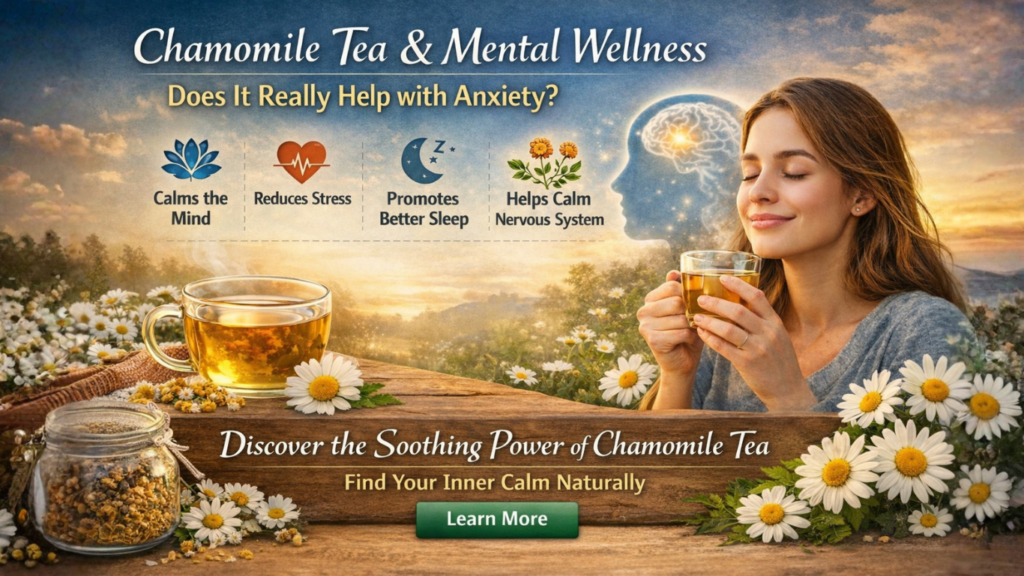
For centuries, chamomile tea has been known as one of the most calming herbal teas in the world. From traditional herbal remedies to modern wellness routines, people have relied on chamomile tea to help relax the mind and body.
Today, many people searching for natural stress relief often ask: Does chamomile tea help with anxiety?
Because of its soothing properties, chamomile tea is widely used for relaxation, mental wellness, and stress management. Let’s explore how chamomile tea may support emotional balance and how you can incorporate it into your daily routine.
What Is Chamomile Tea?
Chamomile tea is a herbal infusion made from dried chamomile flowers. It contains natural plant compounds, including antioxidants such as apigenin, which may interact with receptors in the brain that promote relaxation.
People have traditionally used chamomile tea to support:
- Relaxation
- Stress relief
- Sleep quality
- Emotional balance
If you’re looking for a soothing herbal tea to add to your wellness routine, you can explore our premium Chamomile Herbal Tea here:
https://tarasteas.com/product/chamomile-herbal-tea/
This loose-leaf chamomile tea offers a naturally calming experience perfect for winding down after a long day.
Chamomile Tea for Mental Health
Many wellness enthusiasts drink chamomile tea for mental health because it encourages calmness and relaxation. While chamomile tea is not a medical treatment, it may help support a peaceful state of mind.
Some ways chamomile tea may support mental wellness include:
- Encouraging relaxation
- Supporting emotional balance
- Helping calm the nervous system
- Promoting restful sleep
These benefits make chamomile tea one of the most popular herbal teas for people seeking a natural way to unwind.
Chamomile Tea Benefits for Stress
One of the most searched topics online is chamomile tea benefits for stress.
Chamomile tea may help reduce feelings of stress by encouraging the body to relax. The warm ritual of brewing tea can also create a calming moment in your day.
Common benefits people report include:
- Reduced mental tension
- Improved relaxation
- Support for calm evening routines
- A soothing break during stressful days
A cup of Chamomile Herbal Tea can be a simple yet powerful way to create a peaceful moment for yourself.
Chamomile Herbal Tea
Does Chamomile Tea Help With Anxiety?
A question many people ask is: Does chamomile tea help with anxiety?
Research suggests that chamomile contains compounds that may promote calmness. These natural plant chemicals may interact with receptors in the brain that help regulate mood and relaxation.
Because of these effects, chamomile tea is often used as a gentle herbal option for managing mild stress and anxiety.
Although results vary from person to person, drinking chamomile tea regularly may contribute to a more relaxed state of mind.
How Chamomile Tea Reduces Stress
Many people search for how chamomile tea reduces stress.
Chamomile contains natural antioxidants that may help relax the nervous system. When combined with the calming ritual of drinking warm tea, this can create a powerful relaxation effect.
Simple habits like sipping herbal tea slowly can encourage mindfulness and help reduce daily stress levels.
Is Chamomile Tea Good for Anxiety?
Another common question is: Is chamomile tea good for anxiety?
Chamomile tea is often used as a natural calming drink that supports relaxation. While it should not replace medical treatment, it may help people manage everyday stress and tension.
When combined with healthy habits such as good sleep and relaxation techniques, chamomile tea can become part of a balanced mental wellness routine.
You can enjoy the gentle calming benefits by trying our loose-leaf Chamomile Herbal Tea available here:
Chamomile Herbal Tea
Chamomile Tea for Depression and Emotional Wellness
Some people explore chamomile tea for depression as a natural beverage that supports emotional well-being.
Although chamomile tea cannot treat depression, it may support relaxation and calmness, which can help promote overall mental wellness.
Maintaining relaxing routines, including herbal tea rituals, can contribute to a healthier lifestyle.
Best Time to Drink Chamomile Tea for Anxiety
Many people wonder about the best time to drink chamomile tea for anxiety.
The most popular time is in the evening or before bedtime, when the body naturally prepares for sleep.
Chamomile tea may help:
- Calm the mind before sleep
- Relax the body
- Support a peaceful bedtime routine
However, chamomile tea can also be enjoyed during stressful moments throughout the day.
How Many Cups of Chamomile Tea for Anxiety?
People also ask: How many cups of chamomile tea for anxiety?
Most individuals can safely drink 1 to 3 cups per day. Drinking chamomile tea regularly in moderation allows the body to experience its calming effects.
As with any herbal tea, it is important to listen to your body and adjust intake accordingly.
Chamomile Tea Side Effects for Anxiety
While chamomile tea is generally safe, some people search for chamomile tea side effects for anxiety.
Possible considerations include:
- Allergic reactions for individuals sensitive to plants in the daisy family
- Mild stomach discomfort in rare cases
- Possible interaction with certain medications
If you have allergies or medical conditions, it is best to consult a healthcare professional.
Chamomile Tea for Relaxation
Chamomile tea is widely recognized as one of the best herbal teas for relaxation.
People drink it to:
- Reduce stress after a long day
- Calm racing thoughts
- Support better sleep
- Create a peaceful daily ritual
A warm cup of chamomile tea can provide a gentle moment of calm in a busy day.
If you’d like to experience this relaxing herbal tea, explore our loose-leaf chamomile blend here:
Does chamomile tea really help with anxiety?
Yes, chamomile tea may help reduce anxiety symptoms due to its natural calming compounds, which can promote relaxation and stress relief.
How does chamomile tea reduce stress?
Chamomile contains antioxidants that may support brain function and help relax the nervous system, leading to reduced stress levels.
Is chamomile tea good for mental wellness?
Yes, chamomile tea is often used as a natural remedy to support mental wellness, relaxation, and emotional balance.
When is the best time to drink chamomile tea for anxiety?
The best time is usually in the evening or before bedtime to help calm the mind and promote relaxation.
How many cups of chamomile tea should I drink for anxiety?
Most people can safely drink 1–3 cups per day, but it is always best to follow personal tolerance and consult a doctor if needed.
Can chamomile tea help with sleep problems caused by anxiety?
Yes, chamomile tea may improve sleep quality by helping to relax the body and reduce anxious thoughts.
Is chamomile tea safe for daily use?
For most healthy adults, chamomile tea is generally safe for daily consumption in moderate amounts.
Does chamomile tea work immediately for anxiety?
It may provide a mild calming effect, but results can vary from person to person.
Can chamomile tea replace anxiety medication?
No, chamomile tea should not replace prescribed medication. It can be used as a supportive natural remedy, but medical advice is important.
Are there any side effects of chamomile tea?
Chamomile tea is usually safe, but some people may experience mild allergic reactions, especially if they are allergic to plants in the daisy family.
Final Thoughts
Chamomile tea has been used for generations as a natural herbal drink that supports relaxation and emotional balance. While it is not a substitute for medical treatment, it can be a comforting addition to your daily wellness routine.
If you’re looking for a calming herbal tea to unwind with, try our soothing loose-leaf Chamomile Herbal Tea here:
Chamomile Herbal Tea
A simple cup of chamomile tea may be the peaceful moment your day needs.