
What Does Having Tea Really Mean
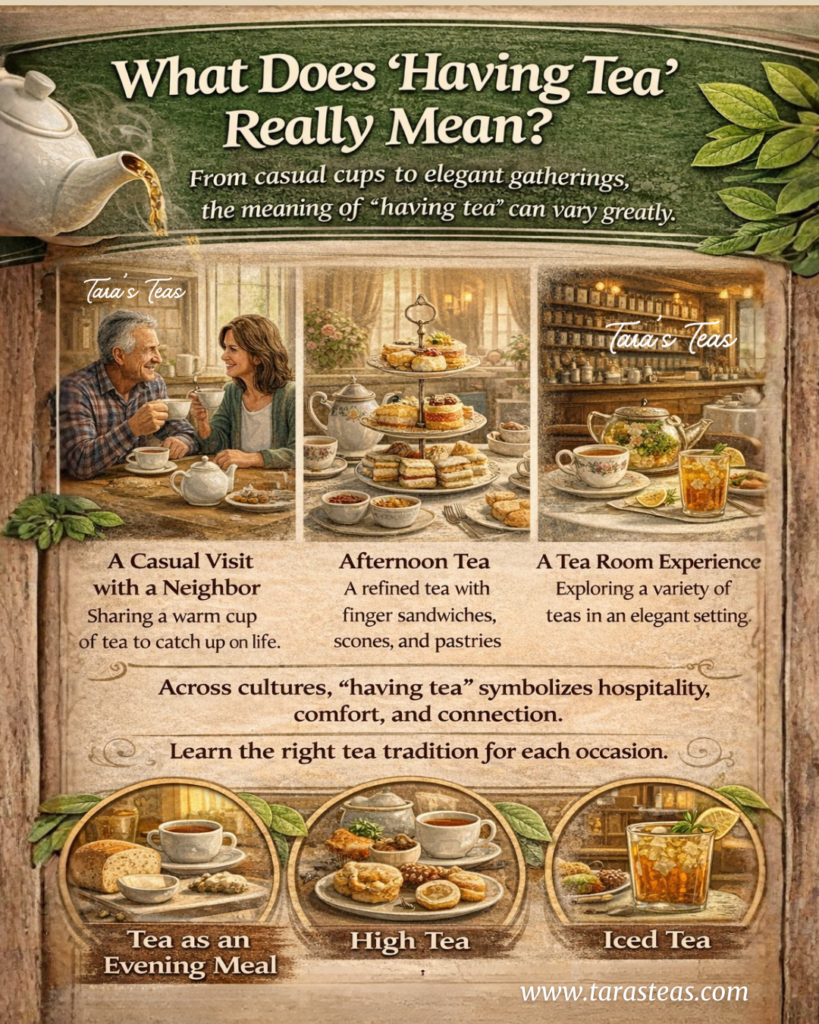
When someone invites you to “have tea,” the meaning can vary depending on the situation.
For some, it simply means sitting down in the kitchen with a neighbor and sharing a warm cup while catching up on life. For others, it might mean a more formal gathering with pastries, teapots, and delicate cups.
Across cultures and generations, tea has always been about more than just the drink itself. It represents hospitality, comfort, and connection.
Understanding different tea traditions can make the experience even more enjoyable — and help you choose the perfect tea to serve for each occasion.
The Original Meaning of Tea
A Light Evening Meal
In many parts of Britain, the word “tea” originally referred to a light evening meal, rather than simply the beverage.
Families would gather after work for a modest dinner accompanied by tea. This tradition was especially common in Northern England and Scotland.
Typical foods served during evening tea included:
- Bread and butter
- Eggs
- Cold meats
- Savory pastries
- Simple desserts
Tea helped create a relaxing pause at the end of the day and brought families together around the table.
Best Teas for Evening Tea
Because evening tea is often served later in the day, many people prefer gentle or caffeine-free teas.
Popular options include:
- Chamomile – calming and perfect before bedtime
- Peppermint – refreshing and soothing for digestion
- Rooibos – naturally caffeine-free with a smooth, slightly sweet flavor
- Lemon balm or citrus herbal blends – light and relaxing
These teas help create a peaceful evening tea ritual without disrupting sleep.
Afternoon Tea
A Classic Social Tradition
Afternoon tea is perhaps the most famous tea tradition.
It began in the early 1800s when Anna, the Duchess of Bedford, began inviting friends for tea and light snacks to bridge the gap between lunch and the late evening dinner.
Over time, afternoon tea evolved into a beloved social event.
A traditional afternoon tea often includes:
- Loose-leaf tea served in teapots
- Finger sandwiches
- Fresh scones with jam and cream
- Cakes or pastries
Afternoon tea is typically served in the mid-afternoon and is meant to be an elegant but relaxed gathering with friends.
Best Teas for Afternoon Tea
Because afternoon tea includes sweet treats, aromatic black teas tend to pair best.
Popular choices include:
- Earl Grey – a citrus-infused black tea that pairs beautifully with pastries
- Darjeeling – light, floral, and delicate
- Assam – bold and malty
Flavored black teas, such as lavender or vanilla blends, also complement desserts wonderfully.
High Tea
A Hearty Evening Tea Meal
Despite the name, high tea is actually more casual and filling than afternoon tea.
High tea developed among working families who needed a substantial meal after long workdays. It was typically served at the dinner table — sometimes referred to as a “high table,” which is where the name originated.
A traditional high tea might include:
- Meat pies
- Savory pastries
- Eggs
- Bread and butter
- Cakes or puddings
Because the meal is more substantial, the tea served alongside it is often stronger and more robust.
Best Teas for High Tea
Full-bodied teas pair best with heavier foods.
Common choices include:
- English Breakfast tea
- Irish Breakfast tea
- Ceylon black tea
These teas have bold flavor profiles that complement savory dishes.
Tea at a Tea Room
A Curated Tea Experience
Tea rooms offer a unique way to experience tea culture.
Unlike casual tea at home, tea rooms often focus on exploring a wide variety of loose-leaf teas and carefully prepared tea service.
Many tea rooms offer:
- Tea tastings
- Seasonal tea menus
- Traditional afternoon tea service
- Specialty tea blends
Visiting a tea room allows tea lovers to discover new flavors and learn more about tea traditions from around the world.
Teas Often Served at Tea Rooms
Tea rooms typically showcase a diverse selection of teas, including:
Green Teas
- Jasmine green tea
- Sencha
- Dragonwell
Herbal Tisanes
- Hibiscus tea
- Berry fruit blends
- Citrus herbal infusions
Specialty Blends
- Spiced chai
- Floral tea blends
- Seasonal fruit teas
These teas highlight the creativity and variety within the world of tea.
How to Make Iced Tea from Loose Leaf Tea
As the seasons begin to change, iced tea becomes a refreshing alternative to hot tea.
Making iced tea from loose-leaf tea creates a fuller flavor and avoids the bitterness often found in commercial iced teas.
Simple Loose Leaf Iced Tea Method
- Bring fresh water to a boil.
- Add loose-leaf tea to a teapot or infuser.
- Brew slightly stronger than you would for hot tea.
- Strain the tea and allow it to cool.
- Pour over ice.
- Add lemon, mint, or fruit for extra flavor.
Best Teas for Iced Tea
Some teas are especially refreshing when served cold:
- Hibiscus tea – bright and tangy
- Peach black tea – naturally sweet
- Mint tea – cooling and refreshing
- Green tea – smooth and light
- Fruit tisanes – vibrant and flavorful
These teas make wonderful iced drinks during spring and summer.
Why Tea Traditions Still Matter
Tea traditions continue to bring people together across cultures and generations.
Whether it’s a quiet cup shared with a neighbor, a formal afternoon tea gathering, or a refreshing glass of iced tea on a warm afternoon, tea creates meaningful moments.
The next time someone invites you for tea, remember — it’s not just about the drink.
It’s about conversation, connection, and slowing down to enjoy a simple ritual that has been shared for centuries.
What is the difference between afternoon tea and high tea?
Afternoon tea is a light social gathering with tea, pastries, and sandwiches served in the mid-afternoon. High tea is a more substantial evening meal that includes savory dishes and stronger teas.
What tea is best for afternoon tea?
Popular afternoon tea choices include Earl Grey, Darjeeling, and Assam, as their flavors pair well with pastries and desserts.
Can you make iced tea from loose leaf tea?
Yes. Loose-leaf tea often produces better flavored iced tea because the tea leaves have room to expand fully during brewing.
What herbal teas are best for evening tea?
Chamomile, peppermint, rooibos, and lemon balm are excellent evening teas because they are naturally caffeine-free and calming.