

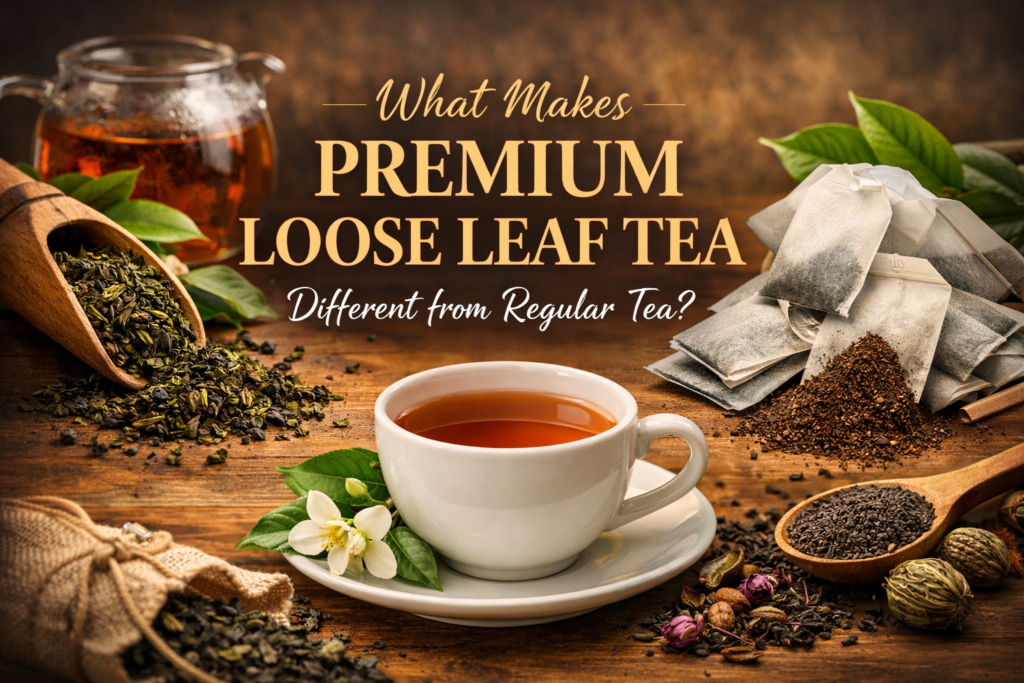
What Makes Premium Loose Leaf Tea Different from Regular Tea?
Tea is one of the most consumed beverages in the world, yet not all tea is created equal. If you’ve ever wondered why premium loose leaf tea costs more than regular tea bags, the answer lies in quality, processing, flavor, and health benefits.
Premium loose leaf tea is crafted from carefully selected whole leaves, while regular tea often contains broken fragments or dust. This difference in quality significantly impacts taste, aroma, and nutritional value. Understanding what sets premium loose leaf tea apart can help you make better choices for your daily tea ritual.
Let’s explore the key differences in detail.
Understanding the Basics: Premium vs Regular Tea
Regular tea bags typically contain fannings or dust small broken particles left over after higher-grade leaves are separated. These smaller particles brew quickly but often lack depth of flavor and complexity.
Premium loose leaf tea, on the other hand, uses whole or large leaf pieces. These leaves are handpicked or carefully harvested, minimally processed, and packed without being crushed. This preserves natural oils, antioxidants, and delicate flavor compounds.
The result? A richer, smoother, and more refined cup of tea.
1.Whole Leaves vs Broken Dust
The most visible difference is leaf size.
Premium loose leaf tea contains:
- Whole leaves or large fragments
- Intact cellular structure
- Visible shape and color
Regular tea bags often contain:
- Tea dust
- Small broken particles
- Less recognizable leaf form
Whole leaves expand naturally during brewing, allowing gradual flavor release. Broken particles brew quickly but can produce a bitter or flat taste.
Because of this, premium loose leaf tea offers better balance and smoother texture.
2. Higher Quality Sourcing and Harvesting
Premium tea is often sourced from specific regions known for their tea-growing heritage. The leaves are typically picked during optimal harvest seasons to ensure maximum flavor and nutrient content.
High-end producers focus on:
- Selective hand-picking
- Early harvest leaves (often more tender)
- Ethical and sustainable farming
Regular tea is often mass-produced for large-scale distribution, prioritizing volume over precision.
This careful sourcing contributes to superior flavor complexity in premium loose leaf tea.
3. Superior Flavor and Aroma
Flavor is where the difference becomes undeniable.
Premium loose leaf tea offers:
- Layered flavor notes
- Natural sweetness
- Floral, fruity, or earthy undertones
- Smooth finish without harsh bitterness
Because the leaves are intact, they retain essential oils that create a stronger and more authentic aroma. When steeped, the fragrance alone often signals higher quality.
Regular tea bags may taste strong but often lack depth and subtlety.
4. Better Nutrient Retention
Tea is rich in antioxidants such as polyphenols and catechins. However, the way tea is processed affects how many of these compounds remain intact.
Premium loose leaf tea preserves:
- Natural antioxidants
- Amino acids like L-theanine
- Essential plant oils
Since regular tea dust has more exposed surface area, it oxidizes faster and may lose some beneficial compounds during storage.
If health benefits are important to you, premium loose leaf tea typically provides better nutrient retention.
5. Greater Brewing Control
One of the most overlooked differences is customization.
With premium loose leaf tea, you can control:
- Water temperature
- Steeping time
- Amount of leaves used
- Multiple infusions
Whole leaves can often be steeped multiple times, revealing evolving flavor layers with each brew.
Regular tea bags offer limited flexibility and usually cannot be re-steeped effectively.
This brewing control enhances both taste and value.
6. Minimal Additives and Cleaner Ingredients
Premium loose leaf tea usually contains pure tea leaves without artificial flavoring or fillers.
In contrast, some regular teas may include:
- Artificial flavor enhancers
- Lower-grade blended leaves
- Added color or preservatives
High-quality loose leaf tea emphasizes purity and transparency in sourcing. Many premium brands also focus on organic or pesticide-free cultivation.
For health-conscious consumers, ingredient quality is a major differentiator.
7. Sustainability and Environmental Impact
Loose leaf tea often requires less packaging than individually wrapped tea bags. Additionally, some tea bags contain microplastics in their sealing materials, which can release tiny particles into hot water.
Premium loose leaf tea:
- Uses minimal packaging
- Reduces plastic exposure
- Often supports ethical farming
This makes it a more environmentally friendly option for daily consumption.
8. The Experience and Ritual
Tea is not just a beverage it’s an experience.
Preparing premium loose leaf tea encourages:
- Mindfulness
- Slower routines
- Sensory appreciation
Watching the leaves unfurl during brewing adds a visual element that tea bags simply cannot provide. The ritual itself enhances relaxation and enjoyment.
This experiential factor plays a significant role in why many tea enthusiasts prefer premium loose leaf tea.
Is Premium Loose Leaf Tea Worth the Price?
While premium loose leaf tea may cost more upfront, it often provides better value over time because:
- Leaves can be re-steeped multiple times
- Less tea is needed per cup
- Flavor remains consistent
When considering quality, health benefits, and overall experience, many tea drinkers find the investment worthwhile.
Frequently Asked Questions
Is premium loose leaf tea healthier than regular tea?
Generally, yes. Premium loose leaf tea retains more antioxidants and natural compounds because it uses whole leaves with minimal processing.
Why does loose leaf tea taste smoother?
Whole leaves release flavor gradually, reducing bitterness and producing a balanced taste profile.
Can regular tea bags be as good as loose leaf tea?
Some high-quality tea bags exist, but most mass-produced options use lower-grade tea particles that lack complexity.
Does premium tea contain more caffeine?
Not necessarily. Caffeine levels depend on the tea type (green, black, oolong), not whether it is loose leaf or bagged.
Can I reuse premium loose leaf tea?
Yes. Many premium teas can be steeped two to three times while maintaining good flavor.
Final Thoughts
Premium loose leaf tea differs from regular tea in quality, flavor, nutrient content, and overall experience. From whole leaf structure to careful harvesting and superior brewing flexibility, every aspect contributes to a more refined cup.
While regular tea offers convenience, premium loose leaf tea delivers depth, purity, and long-term value. For those who appreciate flavor complexity and health benefits, upgrading to premium loose leaf tea can transform a simple daily habit into a meaningful wellness ritual.
Choosing quality over convenience may just redefine how you experience tea one thoughtfully brewed cup at a time.
